Your CD maturing. Now what?

When your CD matures, the bank gives you a short grace period, usually about 7 to 10 days, to decide before it acts for you. Your three choices: renew it, move it somewhere it keeps earning, or withdraw it.
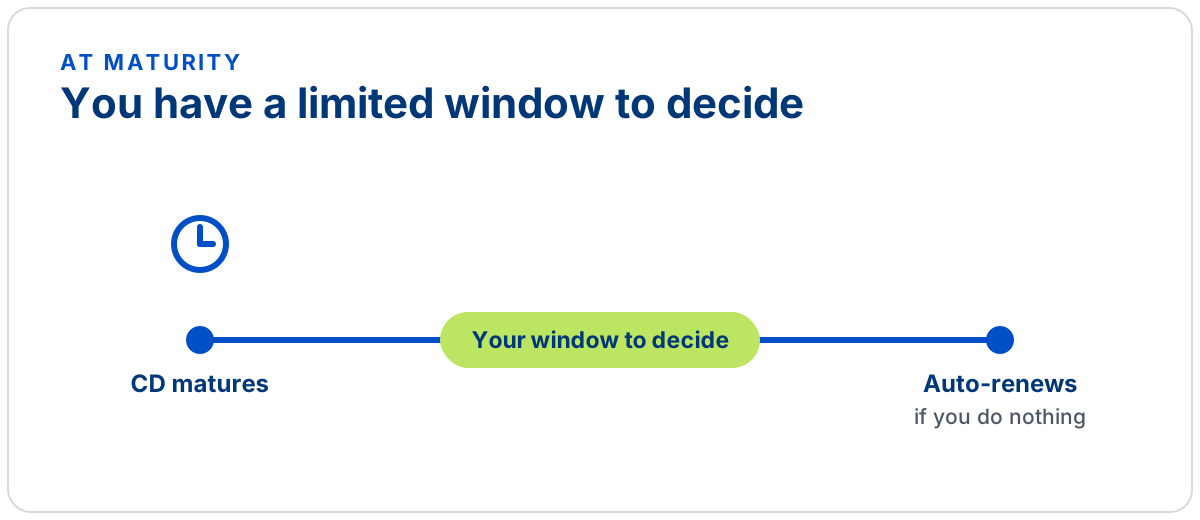
We are writing this to help you make that call on purpose, rather than let the calendar make it for you. A maturity notice is easy to set aside, and if you do, the money often re-locks into a new term at a lower rate without you choosing it. A few minutes of attention now protects what you have earned.
What happens when a CD matures: auto-renewal, and why the new rate is usually lower
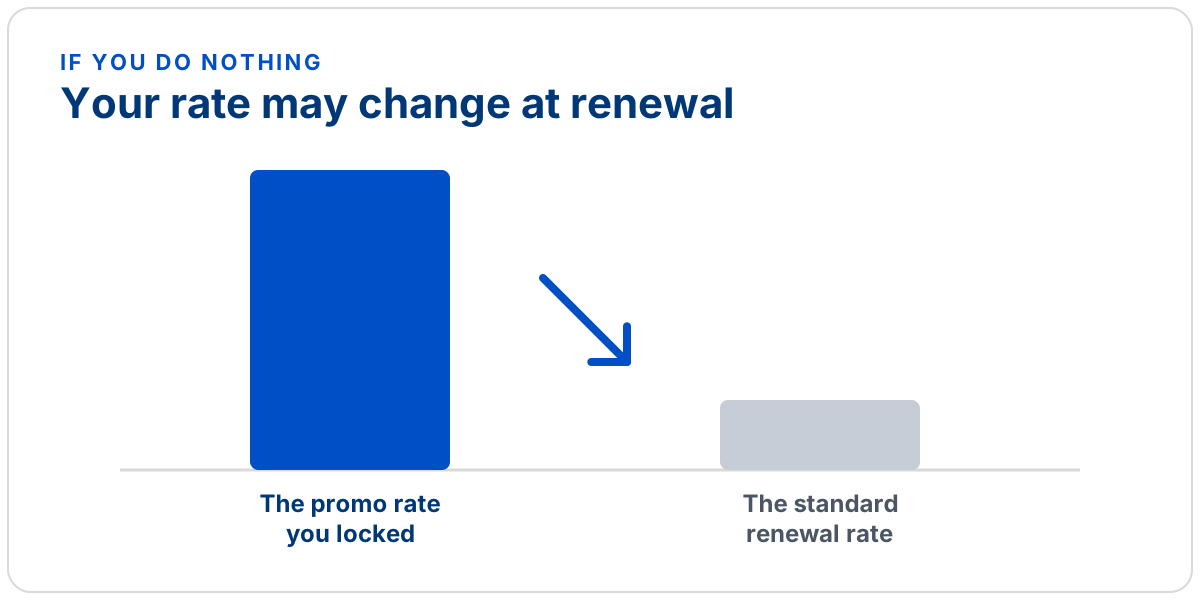
You are entitled to advance written notice before your CD matures, so the letter or email you received is your cue, not junk mail. If you let the grace period pass without saying anything, most banks roll the balance into a fresh CD of the same or a similar term. The catch is the rate. A promotional CD does not renew at another promotional rate. It renews at the standard rate in effect on your maturity date, off the bank's regular menu, and that is often well below the special you originally signed at.
Put plainly: your rate does not carry over. The promo was a limited offer, the renewal is the everyday rate, and the two are rarely the same number. The Consumer Financial Protection Bureau puts it directly, noting the renewal rate "is not guaranteed to be the same" as your old one. That is not a bank being sneaky. It is just how rollovers work everywhere. But it means silence has a cost, and you should decide on purpose rather than by default.
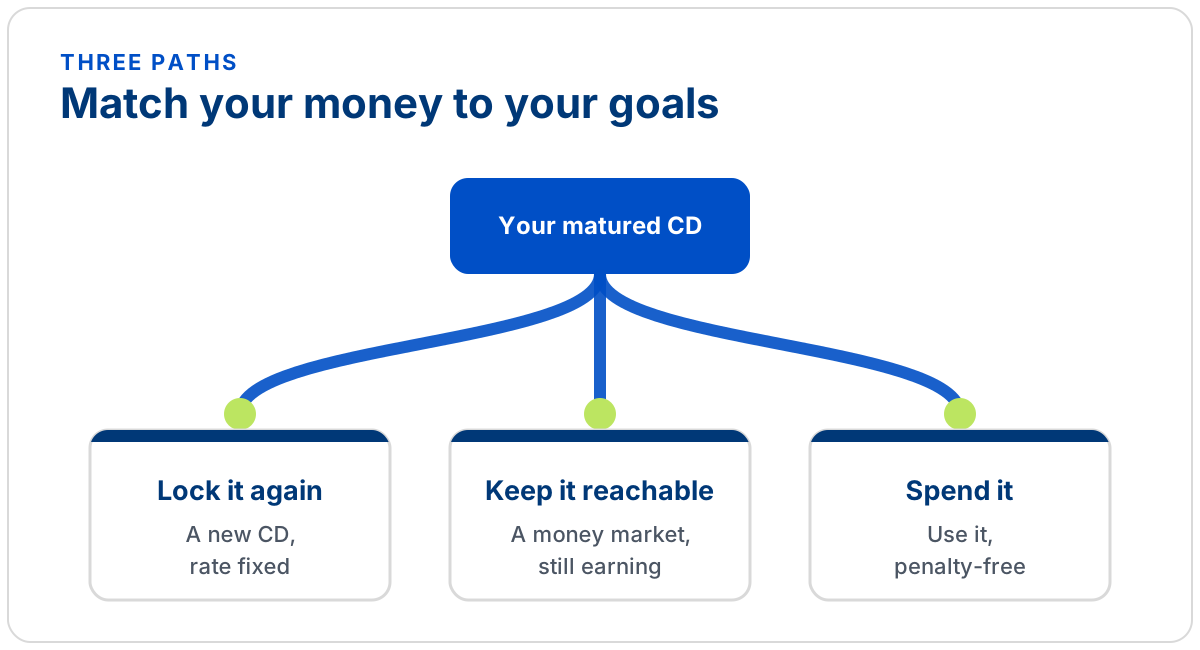
Your three paths, by what you actually need the money to do
Lock it again in a CD. If you do not need this cash for a while and you want a rate that will not move, another CD makes sense. A CD's rate is fixed for the full term, which is the whole appeal when rates are drifting. Just compare what is on offer today before you renew, because the current special may beat the automatic rollover.
Keep it liquid and earning in a money market account. If you might need the money sooner, or you simply do not want to commit it again, a money market account keeps it reachable while still paying you. A competitive money market can pay many times the FDIC national average, and unlike a CD there is no term to break if plans change. One honest trade-off to weigh: a money market rate is variable, so it can move up or down over time, where a CD rate is locked for the term. If rates keep drifting down, that flexibility is the price of keeping your money reachable. You can typically write the occasional check or move funds when you need to.
Spend it. If the CD was earmarked for something, a down payment, a wedding, a tax bill, the grace period is your penalty-free moment to take it out and use it. That is a good outcome too. Take it before it re-locks.
The grace-window checklist
- Find your maturity date on the notice the bank sent.
- Decide which path fits: renew, move, or withdraw.
- Compare the rollover rate against today's actual offers, including money market rates.
- Call or stop in before the grace period closes. Doing nothing chooses auto-renewal for you.
- If you move or withdraw, do it inside the window so there is no early-withdrawal penalty.
How we handle maturity at Five Rivers
We keep it simple. You get advance notice, and there is a real person at our Route 4 branch in Paramus you can call, not a phone tree. If moving your matured CD into a money market or savings account is the right call, we can do it in about five minutes between your own accounts, no new paperwork marathon. And if renewing is genuinely your best option, we will tell you that too. Your deposits with us are insured by the FDIC up to $250,000 per depositor, per insured bank, per ownership category, whichever path you pick. Member FDIC.
The point of banking with a community bank is that someone actually picks up. If you want to talk it through before you decide, that is what we are here for.